Google has just introduced Search Profiles, a dedicated and shareable space where creators, publishers, and brands can shape their presence in the search engine. Beyond the headline, there is a detail that especially interests any editorial team monitoring visibility. From these profiles, users can follow sources, increasing the likelihood that their content appears in Google Discover.
For audience teams, this is not a cosmetic announcement. It’s a new piece in the relationship between brand identity, entities recognized by Google, and feed distribution.
What Search Profiles Are
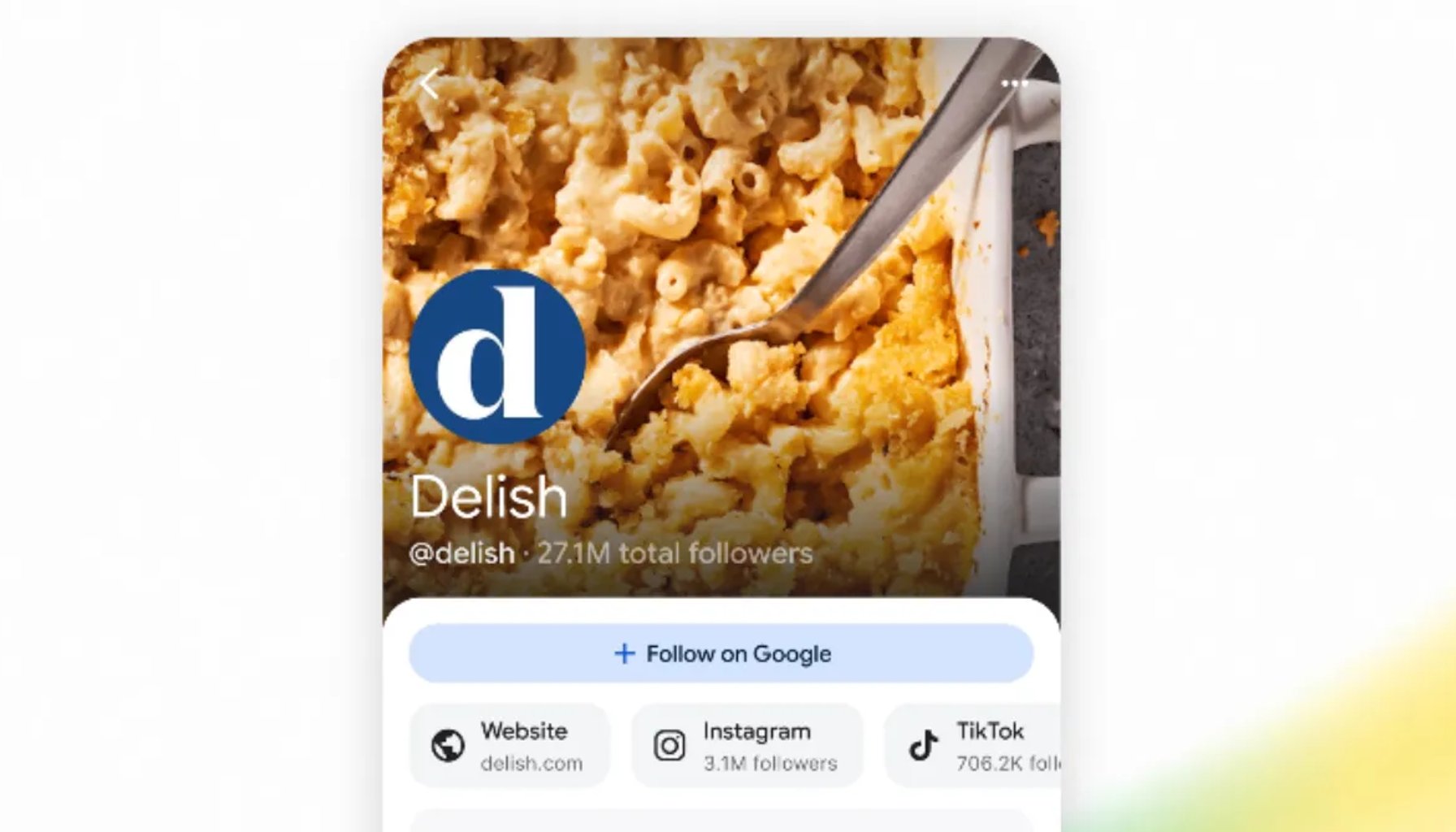
A Search Profile is a centralized page where a creator or publisher gathers and displays their work, latest articles, videos, and social media posts all in one place. The idea is to give the audience a reliable, up‑to‑date reference point about who is behind the content, instead of scattering that information across platforms.
The profile is customizable, supporting an avatar, biography, website, social‑media links, video platform links, and other relevant content. In practice it works like an official business card within Google’s ecosystem.
How to Access a Profile
Google has outlined three ways to access them, especially on mobile:
- From the creator’s or publisher’s knowledge panel (the information box that appears in search for notable people, places, and entities).
- By tapping the name of a publisher or creator directly in Discover.
- Via a direct URL, which makes the profile shareable on any channel.
This third method is important: because it is a standalone, linkable address, the profile becomes a URL we can actively promote rather than a passive search element.
The Connection with Google Discover
Here is the point that should matter most to audience teams. Search Profiles let users follow a source straight from the profile. And according to Google, following a creator or publisher makes it more likely that their content shows up in Discover, the feed that occupies the home screen of the Google app.
So the profile is not just a visual showcase; it’s a new mechanism to build a recurring audience within Discover. Until now, feed visibility depended largely on domain authority, content freshness, and strong entity connections. With profiles, Google adds a more explicit affinity signal: users who have actively chosen to follow a source.
For a feed as concentrated and volatile as Discover, having a base of declared followers can become a differentiating advantage over relying solely on timely relevance.
Who Can Claim a Profile Right Now
Initially, creators and publishers with a significant audience on at least one major social or video platform can claim and customize a Search Profile. It is not an open‑to‑all feature from day one; it starts limited to profiles that already have some traction outside of search.
Claiming the profile is an active step: you must verify your identity and fill in the information you want to display.
Profiles and Knowledge Panels: How They Relate
Search Profiles are closely tied to the knowledge panel, and the relationship can be understood in two scenarios:
- If you don’t yet have a knowledge panel, claiming your profile may trigger the creation of one for eligible creators and publishers. It’s a new path for Google to recognize you as an entity.
- If you already have a knowledge panel, it gets enriched with your updated avatar, latest content, and a direct link to the profile.
For those working on entity SEO and brand recognition in Google, this reinforces a known idea: consolidating a source’s identity (clear authorship, consistent presence across platforms, stable brand signals) is gaining weight in how Google represents and distributes that content.
Availability: First the U.S., Then the Rest
The rollout starts in the United States. Google has indicated that it plans to expand Search Profiles to more creators and publishers in other countries and to add new capabilities over time.
This means that for editorial teams outside the U.S., the move is still in a preparation and anticipation phase.
What This Means for Media, Publishers, and Creators
While waiting for international expansion, several operational takeaways are worth considering:
- "Follow" enters the Discover equation: Building a follower base is no longer just a social‑media task; it now directly influences visibility in Google’s feed.
- Brand identity as an entity gains weight: A consistent avatar, clear biography, and uniform cross‑platform links feed both the profile and the knowledge panel.
- The knowledge panel becomes more actionable: Claiming a profile can generate or improve it, instead of waiting for Google to build it on its own.
Get Ahead Before It Reaches Your Market
Organize your presence on social and video platforms now, and strengthen authorship signals, so you’re ready when the feature opens in your country.
Search Profiles are, at their core, another step by Google toward a search experience where the source matters as much as the content. For teams that live off Discover visibility, understanding early how these profiles work (and how "follow" fuels the feed) is no longer a niche curiosity; it becomes a core part of audience strategy.
Source: https://blog.google/products-and-platforms/products/search/a-new-profile-to-help-publishers-and-creators-highlight-their-work-on-search/